Before the Multiplex: The Local Picture House as a Social Place
See how a local picture house can turn a film outing into a shared evening, and decide when its neighborhood character suits the plans you have.

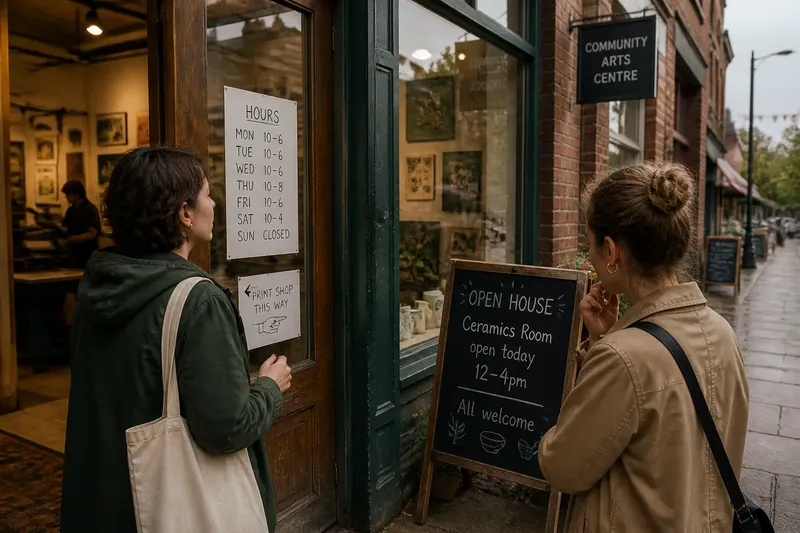
You arrive at the local picture house early because your friend is still walking over, and the lobby gives you somewhere to wait without turning the evening into a formal dinner plan. A hand-lettered notice, a familiar face at the counter, or a short chat about the film can make the outing feel connected to its neighborhood before the lights go down. The local picture house is not only a place to watch a film; it can be a shared destination with its own social rhythm.
That distinction matters when you are choosing how to spend an evening. A large multiplex is often a straightforward choice for broad selection and a tightly scheduled visit. A neighborhood cinema may suit you better when you want the film and the surrounding encounter to belong to the same outing.
Choose the picture house when the outing should feel rooted in its neighborhood
Independent cinemas and older local theaters can become landmarks through repeated use. People meet there before a screening, recognize the staff, and return for programs that feel connected to local tastes. The building itself—a compact lobby, a street-facing marquee, or a café beside the ticket desk—can give the visit a sense of place that a screen alone does not provide.
This does not mean every small cinema is intimate or every multiplex is impersonal. The useful question is what kind of evening you want: one organized mainly around getting into a particular film, or one that leaves room for the venue and its community to be part of the experience.
Say you and a friend want to see a new release but also have time to catch up. You choose a neighborhood cinema with a lobby café and plan to arrive early; the likely result is a relaxed conversation before the screening, with the film still serving as the evening’s center. If you need the broadest choice of showtimes instead, a multiplex may fit better.
Pick a local cinema when conversation belongs before or after the film
A picture house can make meeting easier because the screening gives a shared plan without requiring everyone to enjoy the same sort of conversation. You can arrive separately, meet in a visible lobby, and let the film provide an easy subject afterward. For a group that has not seen one another in a while, that structure can feel more comfortable than sitting down to a long meal.
Look at the venue’s layout and schedule rather than assuming that every cinema encourages lingering. A small foyer may be busy just before showtime, while a café or nearby public square can offer a better place to meet. If the cinema runs a post-screening discussion or a themed program, check whether it is part of the event or requires separate booking.
The social side can also matter when you are going alone. A regular screening series, an afternoon classic, or a community-curated program can make solo attendance feel like joining a shared ritual rather than simply filling an empty evening. You do not need to talk to anyone for the place to feel communal; being among people who chose the same event can be enough.
Choose a multiplex when selection and timing matter most
Sometimes the film is the whole point. If your group has different preferences, a multiplex may offer more titles and showtimes to coordinate around. Its larger concourse, online booking, and nearby food options can also make it practical when you are meeting people from different parts of town.
A local picture house may have a narrower program, and its schedule can be shaped by special events, repertory screenings, or a smaller number of rooms. That can be a pleasure when the program appeals to you, but a constraint when you need a particular release at a particular time. Check the cinema’s current listing before making plans, especially if the outing depends on a discussion or special screening.
Think of the choice like selecting a table at a café: a busy food hall offers more options, while a neighborhood spot may make the setting part of the reason you came. Neither is automatically better. Choose the larger venue for convenience and range; choose the local one when its character or program adds something you want from the evening.
Match the venue to your kind of evening
- You are catching up with a friend. Pick a picture house with a comfortable meeting point or a café nearby, and leave time to talk before or after the screening.
- Your group cannot agree on a film. Choose a multiplex with more options and showtimes, then settle on the venue that makes the meeting easiest.
- You want a distinctive program. Look for a local cinema’s repertory, festival, themed night, or filmmaker discussion, and confirm what the ticket includes.
- You are going alone and want a shared atmosphere. Consider a recurring series or community event where the audience gathers around a common interest.
- You have limited time. Favor the venue with the simplest route and a screening time that fits your schedule; a charming lobby cannot make a rushed trip feel spacious.
These choices are not fixed rules. A neighborhood cinema may be the most convenient option in one town, while a multiplex may be the easiest place for friends to meet in another. Let the actual program, access, and meeting arrangements guide the decision.
What should you check before choosing a local picture house?
Does the cinema have a program beyond current releases?
Look for repertory films, local festivals, special screenings, or discussions if you want the venue’s cultural life to shape the outing. A focused program can make a smaller cinema especially appealing, but it is less useful if you simply need a broad choice of mainstream titles.
Is there a comfortable place to meet?
Check whether the venue has a lobby café, seating, or a clear meeting point, and consider a nearby café if it does not. This matters most when people are arriving separately or want time together outside the screening.
Will the schedule work for everyone?
Compare screening times with travel and any plans afterward. A venue with a strong neighborhood feel may still be the wrong fit if its schedule makes the evening difficult to coordinate.
Can everyone in the group use the space comfortably?
Review the cinema’s access information and contact the venue if you need details about seating, step-free entry, captioning, or other arrangements. A little clarification beforehand can help you choose a screening that works for the people coming.
Let the venue add to the plan without taking it over
The local picture house works best as a social place when you treat its surroundings as part of the evening, not as an obligation to fill every moment. You might meet in the lobby, see a film, and head home; or choose a nearby café for a longer conversation afterward. The venue can provide the common point around which a simple plan takes shape.
For a neighborhood outing, the local picture house is worth considering when you want the film to connect you with a place and the people who gather there. Check the program, think about how your group likes to meet, and choose a cinema whose character suits the evening. A good local cinema gives you more than somewhere to sit in the dark: it gives the group a reason to arrive at the same door.