The Perfect Day-Out Checklist Can Make You Miss the Day
A perfect day-out checklist can crowd out the best moments. Choose one main interest, prepare for the basics, and leave room for a welcome detour.
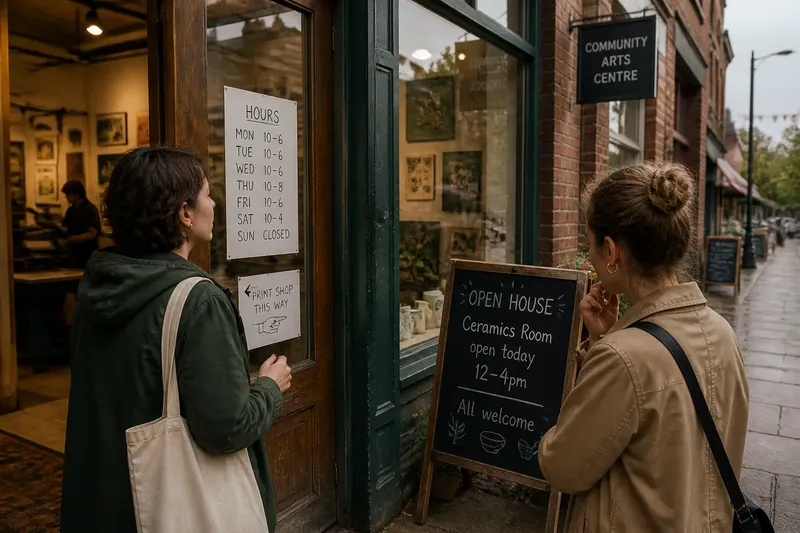
You’re standing outside a neighborhood print studio, checking its posted hours while your friend studies a hand-lettered notice for a nearby open house. A perfect day-out checklist can help you reach places like this, but it can also make every discovery feel like a delay. Keep the practical details clear and let the outing be shaped by what catches your attention.
A local outing is less like following a route than choosing what deserves your attention once you arrive. The useful planning happens before and during the visit: confirming what is available, agreeing on what matters to the group, and making decisions when new options appear.
What belongs on a day-out checklist?
A day-out checklist should answer practical questions, not dictate the afternoon. Use it to remember the details that could affect whether you can take part or get there comfortably.
- Check the destination’s current information. If its hours or admission details are clear, plan around them; if they are missing or uncertain, contact the venue or choose another destination.
- Check whether you need to reserve a place. If booking is required, arrange it before leaving; if entry is open, keep the visit flexible.
- Check the route for a disruption or access issue. If your usual route is affected, choose another practical route; if it is clear, save the directions and move on.
- Check what the setting calls for. If the visit involves outdoor paths or changeable weather, bring suitable shoes or a light layer; if it is indoors and accessible by transit, avoid carrying extras you do not need.
- Check what the group needs to participate. If someone needs seating, quieter surroundings, or an accessible entrance, confirm those details and adjust the destination if needed.
- Check whether an optional stop is truly optional. If missing it would cause disappointment, agree on how to fit it in; if not, leave it off the plan.
Once each item has a clear decision, put the checklist away. It is a reminder for preparation, not a scorecard for the outing.
Choose a place that gives the outing its character
Instead of trying to cover several types of activity, choose a setting with something to notice or do: a community art room, a used-book shop with a reading corner, a public garden, or a market where local makers sell their work. The place itself can offer enough variety without requiring a string of separate destinations.
Before you leave, ask what would make the visit satisfying even if you did nothing afterward. “Browse the neighborhood history exhibit” is a clear intention; “see the exhibit, find lunch, walk the river, and reach the overlook” is a packed sequence. A single intention gives everyone a way to decide what to do next without making the day feel unfinished.
How do you decide what to do once you arrive?
What if the place is busier than expected?
Ask whether waiting still suits the group and whether there is something nearby worth seeing in the meantime. If not, choose a different activity rather than treating the original plan as a commitment.
How can a group choose between two nearby places?
Compare what each person is curious about and how much time or energy the options ask of the group. If nobody feels strongly, pick one place to visit first and make the other an optional next choice.
Should you follow an unexpected invitation nearby?
Check whether it is open to visitors, fits the group’s comfort and access needs, and leaves enough time to enjoy it. If those conditions are unclear, ask the host or pass without feeling obliged to replace it with something else.
Use local details to make the visit feel personal
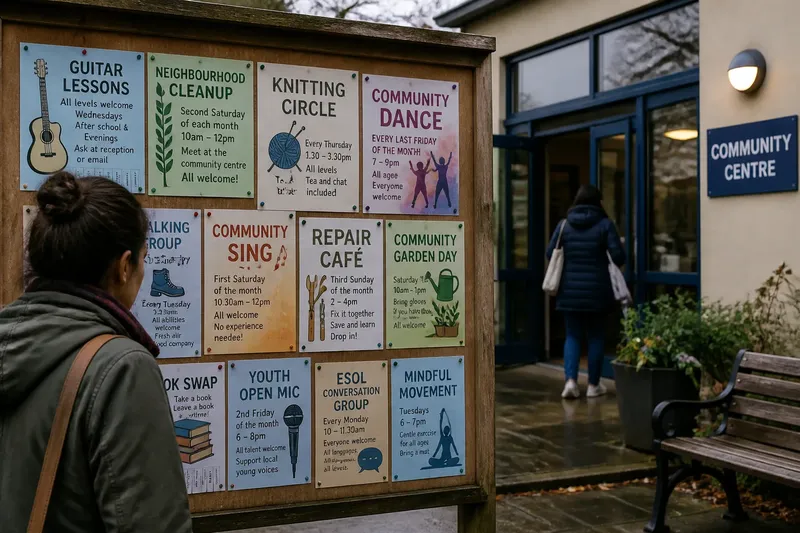
Small details often make a place memorable: a community noticeboard, a maker explaining how a display was arranged, or a shop window showing work from nearby artists. Look for cues that tell you how visitors can take part, and ask before entering spaces that might be private or staff-only.
Imagine you and a friend arrive at a neighborhood arts center intending to see its print display. The lobby notice also mentions an open ceramics room; you ask a staff member whether visitors may enter, learn that it is open, and check that your friend is comfortable with the noise. You spend time in the print display first, then visit the ceramics room; if the noise feels distracting, you return to the quieter gallery instead.
This kind of choice is more useful than adding a long list of possible stops before you know what the place offers. A nearby invitation can be a welcome addition, but it does not have to become the new plan.
How should you handle practical changes during the outing?
Make decisions based on what has changed, rather than trying to preserve every intention. If a venue closes unexpectedly, ask about another nearby place with a similar interest; if the group is tired, take a seated break or head home.
For a shared outing, make it easy to say no to an extra stop. A simple “Would you like to look inside, or keep going?” gives everyone a real choice. If opinions differ, agree on a comfortable meeting point or choose the option that works for the group as a whole.
How much should you plan before leaving?
Confirm the details that could prevent the main visit: current hours, reservation requirements, transit changes, and access information. Venue policies can change, so rely on the venue’s own current guidance when a specific rule or arrangement matters.
Then prepare for the setting without packing for every possibility. A charged phone, a water bottle, and comfortable shoes may suit a long visit with walking; a quick stop at a nearby gallery may call for little more than directions and any required reservation.
The aim of a day-out checklist is to make the outing possible, then leave room for the place and the people you are with. Keep the essentials, make choices as new information appears, and let the visit end when it feels complete—not when every imagined stop has been crossed off.