A First Frost, One Warm Stop and a Slow Neighborhood Loop
Plan a first-frost neighborhood loop with a warm stop, clear route choices, and practical ways to enjoy winter details without lingering on slick ground.
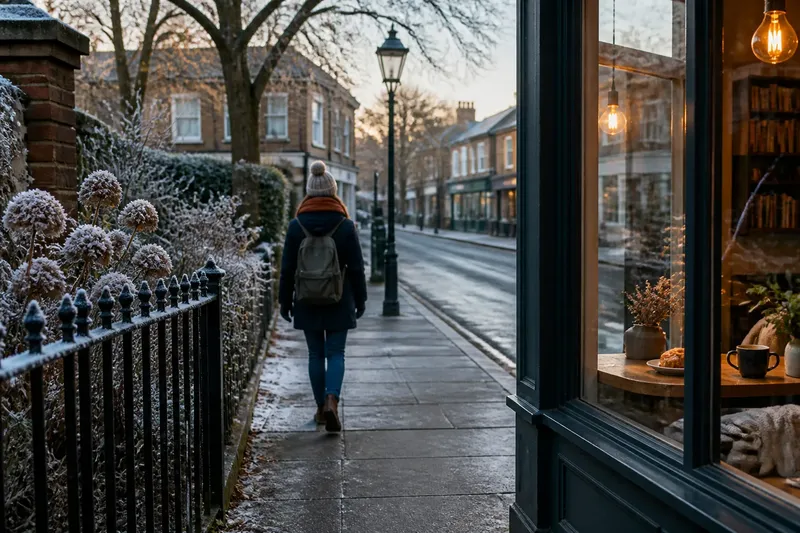
The park grass has a pale edge of frost, and the bench you planned to use suddenly looks uninviting. A first-frost neighborhood loop can still feel welcoming if you make the warm stop part of the route, rather than treating it as a reward you must reach.
Let the cold shape the outing itself: notice which streets catch the morning light, how frost collects along a fence, and where the neighborhood offers shelter. A short walk becomes its own seasonal activity, more like turning the pages of a small local nature journal than following a list of errands.
Let the frost choose the route’s character
Start with a place where winter details are easy to notice from stable ground: a park edge beside a sidewalk, a tree-lined residential street, or a row of storefronts with changing window displays. Choose a route with a clear turn toward your warm stop and a familiar way back.
Frost often lingers in shade, so favor maintained sidewalks and paths over narrow cut-throughs. Look for seed heads above a garden wall, pale branches against brick, or a dusting along a railing; keep your feet on the clear surface instead of stepping onto grass to get a closer look.
Before heading out, check the local forecast and any notices for the park or venue. If sidewalks look icy or visibility is poor, choose a shorter route on familiar streets, or save the outing for another day.
Make the warm stop part of the winter scenery
Choose a café, bakery, library common area, or indoor market that naturally sits along the route. The stop can offer more than shelter: a window seat may frame the frosted street, while a bakery’s warm air and familiar neighborhood sounds give the walk a distinct pause.
Check the venue’s own listing or posted notice before leaving, and identify one nearby alternative. If both places are busy, don’t force a long stay; take a brief reset somewhere open to the public, without blocking an entrance or lingering where visitors are not welcome.
Keep gloves and a hat easy to remove, and open your coat before you start to feel overheated. At the stop, let damp items air out if the venue allows it; sitting still in wet clothing can make the return feel colder.
Choose winter details that reward a slower pace
Give yourself one loose subject to notice instead of a destination count. You might follow the way frost disappears from sunny walls, compare the season’s window displays, or watch for birds near a hedge from the sidewalk.
Say you leave home on a frosty morning with a library as your planned warm stop and a bakery nearby as a fallback. You notice a glossy shaded path before reaching the park, so you stay on the sidewalk, take the street past the bakery, and find it open; the observable result is a warm pause without crossing the slippery stretch, though you miss the park’s frosted trees.
That tradeoff is part of the outing, not a failure to complete it. Let the season offer what is visible from safe, public places, and leave private yards, planted beds, and building entrances undisturbed.
What should you decide before leaving?
What should I wear for a frosty neighborhood walk?
Use layers that are easy to adjust, with a hat and gloves for exposed stretches and footwear that feels secure on the route’s ordinary surfaces. If rain, ice, or strong wind makes those conditions unsuitable, shorten the walk, choose a clearer street route, or postpone it.
How do I choose a warm stop?
Pick an indoor place that lies naturally along your route, then check its current opening information and note a nearby alternative. If neither option is available, skip the indoor pause rather than relying on a closed door or entering a place that is not open to the public.
What if the frost melts before I go?
Keep the neighborhood loop but shift your attention to bare branches, early lights, or winter window displays. If the streets are wet or slick, favor clear sidewalks and shorten the route instead of looking for frost in shaded or uneven places.
Can I bring my dog on the walk?
Check local leash rules and the dog’s comfort in cold weather, and confirm that the warm stop permits animals before planning to enter. If it does not, choose a dog-friendly outdoor pause where you can wait without blocking a doorway, or make the loop shorter.
Let the return follow the safest familiar way
Before leaving the warm stop, check whether your gloves and scarf are comfortable to wear and whether the weather has shifted. Take the direct route home if the ground looks slick, the light is fading, or the cold has become unpleasant; continue the scenic way only if it still feels clear and manageable.
A first-frost neighborhood loop is easiest to enjoy when the route and the season share the attention. Keep the warm stop close, notice details from steady ground, and remember that the best first-frost detail may be the safe, familiar street that leads you home.